The C-Wire Explained: Powering Modern Thermostats
Installation & Wiring Guide
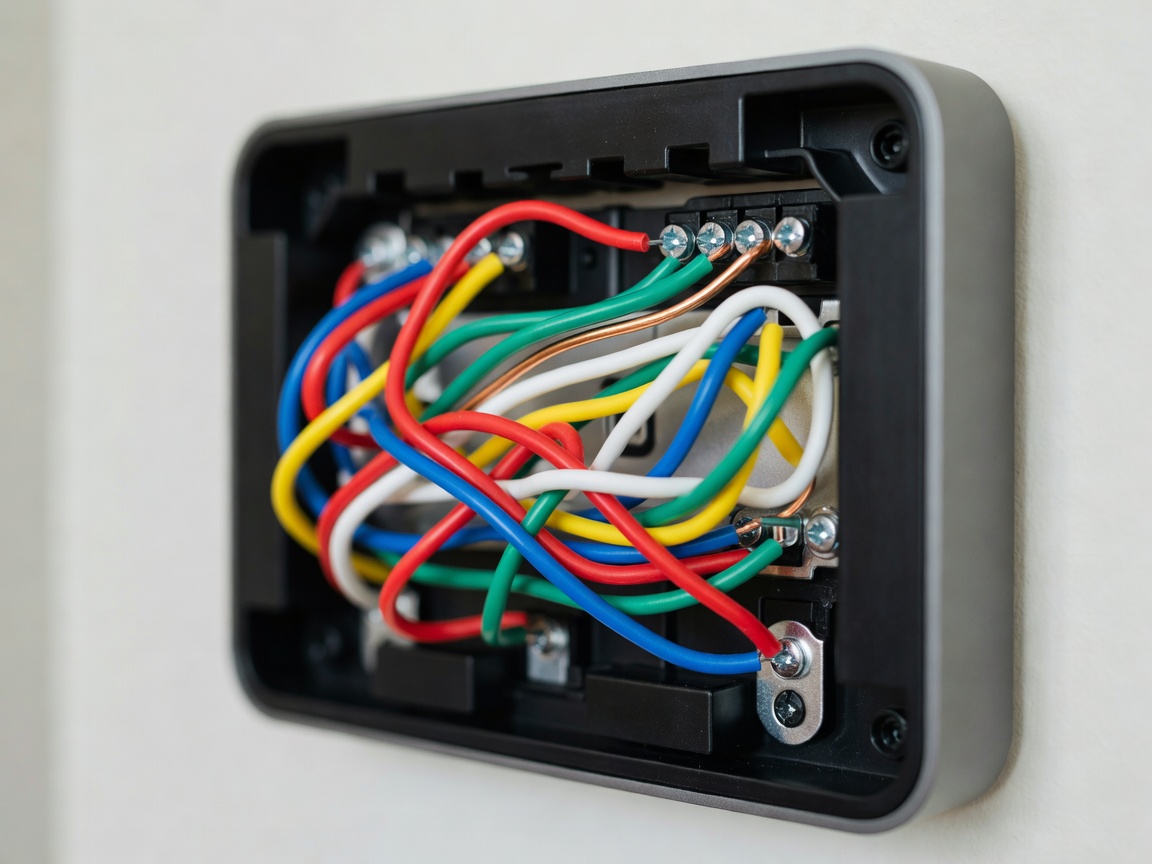
The single most common hurdle when upgrading from an analog or basic programmable thermostat to a modern smart climate hub is the "C-Wire" or Common Wire. While older units relied on AA batteries or siphoned tiny amounts of power during heating cycles, today's devices function more like wall-mounted computers. They feature high-resolution displays, continuous Wi-Fi connectivity, internal environmental sensors, and localized processing chips. These features demand a stable, continuous flow of 24-volt AC power.
What Exactly is the Common Wire?
In standard residential HVAC wiring, power is supplied by a transformer located near the furnace or air handler. The "R" wire (often split into Rc for cooling and Rh for heating) carries 24V power *to* the thermostat. When the thermostat calls for heat or cooling, it acts as a switch, bridging the R wire to the W (heat), Y (compressor), or G (fan) wires to complete the circuit back to the equipment.
However, an open switch means the power simply waits at the thermostat. The thermostat itself cannot run its own internal electronics without completing a separate, continuous circuit. This is where the C-Wire comes in. It provides the return path for continuous 24V power, completely independent of whether the heating or cooling is currently running.
Identifying Your Wiring Setup
Before purchasing a smart thermostat, it is essential to check your existing wiring backplate. Pop the current thermostat off the wall (ensuring breaker power is off first for safety) and look at the terminal blocks.
- The ideal scenario: You see a wire connected to a terminal labeled "C". This indicates full compatibility with almost all smart units.
- The hidden wire scenario: You don't see a wire connected to C, but looking into the wall cavity, you notice an extra, unused wire wrapped around the bundle. You can often connect this unused wire to the C terminal on your HVAC control board and use it.
- The missing wire scenario: Only 2, 3, or 4 wires emerge from the wall, and all are currently in use for basic heating and cooling functions.
Solutions for Homes Without a C-Wire
If your home lacks a dedicated common wire, you do not necessarily need to pull new copper wire through your drywall. The industry has adapted with several reliable workarounds:
1. Power Extender Kits (PEK) / Add-a-Wire Adapters
Many premium smart thermostats include a small module meant to be installed at the furnace control board. This adapter multiplexes the signals. It combines the Y (cooling) and G (fan) signals onto a single wire, freeing up one of your existing in-wall wires to serve as the new C-Wire. The adapter at the furnace then unpacks these signals and routes them to the correct terminals. This is the most robust solution for 4-wire systems.
2. Plug-in Transformers
If your thermostat is located near a standard wall outlet, you can purchase a 24V plug-in transformer. You plug the adapter into the wall and run the thin wires up to the thermostat, connecting them to the Rc and C terminals. While effective, visible wires running up the wall can detract from the sleek aesthetic of the device.
3. Power Stealing and Battery-Powered Models
Some models claim to operate without a C-Wire by utilizing internal batteries combined with "power stealing." This method pulses tiny amounts of power through the heating/cooling circuits—enough to charge the internal battery, but theoretically not enough to trigger the furnace relay.
However, power stealing has notable drawbacks. On highly efficient, sensitive modern HVAC boards, these tiny power pulses can cause relays to chatter, leading to system lockouts or premature component failure. Furthermore, if your system does not run for extended periods (such as during mild shoulder seasons), the internal battery may deplete, causing the thermostat to drop offline.
Conclusion
While encountering a lack of a C-Wire can be frustrating, it rarely precludes the installation of modern climate controls. By understanding the electrical fundamentals and assessing your specific HVAC configuration, you can choose the right bridging technology. If dealing with control boards and 24V transformers feels outside your comfort zone, consulting a licensed HVAC technician is always the safest path forward to ensure system integrity and longevity.