Zoned Heating & Cooling Strategies
Architecture & HVAC
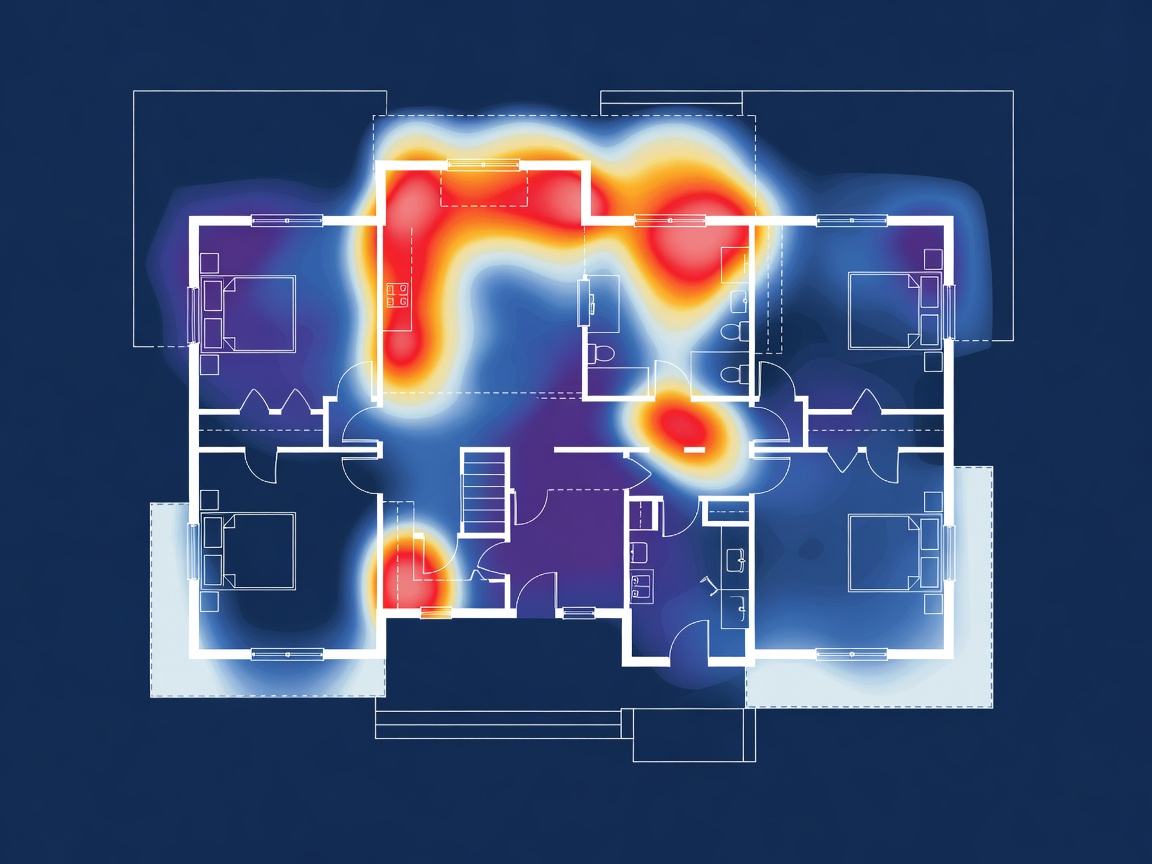
For decades, the standard residential HVAC system operated on a fundamentally flawed premise: treating the entire structure as a single thermal entity. A central thermostat, typically located in a hallway or living room, dictated the temperature for every room in the house, regardless of occupancy, solar heat gain, or structural insulation variations. The evolution of smart thermostats and motorized duct dampers has ushered in the era of zoned heating and cooling, dramatically improving both comfort and energy efficiency.
The Problem with Single-Zone Systems
In a traditional single-zone setup, achieving comfort in one room often creates discomfort in another. A second-story bedroom with southern exposure will naturally absorb significant solar radiation during the day. Meanwhile, a basement or north-facing office remains cool. If the main thermostat is on the ground floor, it remains blind to these extremes. The system will either under-cool the upstairs or drastically over-cool the main floor in an attempt to balance the structure.
Furthermore, heating or cooling unoccupied rooms—such as guest bedrooms or formal dining rooms—wastes substantial amounts of energy. Zoned systems resolve this by dividing the home into logical thermal sectors.
How True Zoning Works
True HVAC zoning requires three primary components working in tandem:
- Motorized Dampers: These are specialized valves installed within the ductwork. They can open or close (fully or partially) to redirect airflow only to the areas that require conditioning.
- Zone Thermostats: Each distinct zone requires its own localized temperature sensor and control interface.
- A Central Zone Controller: This specialized electronic panel sits between the thermostats and the primary HVAC equipment. It receives calls for heat or cool from the various zones, evaluates the overall system demand, manages the damper positions, and safely operates the furnace or air conditioner.
When Zone A (the master suite) calls for cooling at night, the central controller activates the AC compressor, opens the damper to Zone A, and closes the dampers to Zone B (the unoccupied living spaces). This directs the full capacity of the blower strictly where it is needed.
Smart Thermostats vs. Remote Sensors
It is crucial to distinguish between true motorized zoning and simple remote sensing. Many high-end smart thermostats offer wireless remote temperature sensors that you can place in various rooms. While highly beneficial, these do not create true mechanical zones.
Remote sensors allow the main thermostat to average the temperature across multiple rooms or prioritize a specific room based on occupancy. For instance, if the master bedroom sensor detects occupancy at 11 PM, the system will run until the master bedroom reaches the target temperature. However, without duct dampers, the system is still conditioning the entire house to achieve that localized goal. True zoning physically restricts the airflow, yielding far greater energy savings.
Bypass Considerations and Equipment Stress
Implementing a zoned system onto single-stage HVAC equipment requires careful architectural planning. If a system is designed to push 1,200 CFM (Cubic Feet per Minute) of air through the entire house, and a damper closes off 70% of the ductwork, the remaining ducts will experience massive static pressure increases. This can cause the blower motor to fail prematurely or the evaporator coil to freeze due to insufficient airflow.
To mitigate this, HVAC professionals utilize bypass ducts equipped with barometric dampers. These bleed excess air pressure back into the return plenum. Alternatively, variable-speed blowers and multi-stage compressors automatically throttle their output to match the demand of the specific zone calling for service, eliminating the need for complex bypass solutions.
Conclusion
Upgrading to a zoned system represents a significant upfront investment, often requiring retrofits to exposed ductwork. However, when paired with intelligent smart thermostats capable of advanced scheduling and occupancy detection, zoning provides unmatched environmental control. It transforms the home from a monolithic climate block into a dynamic, hyper-efficient living space.